
Hand Spun
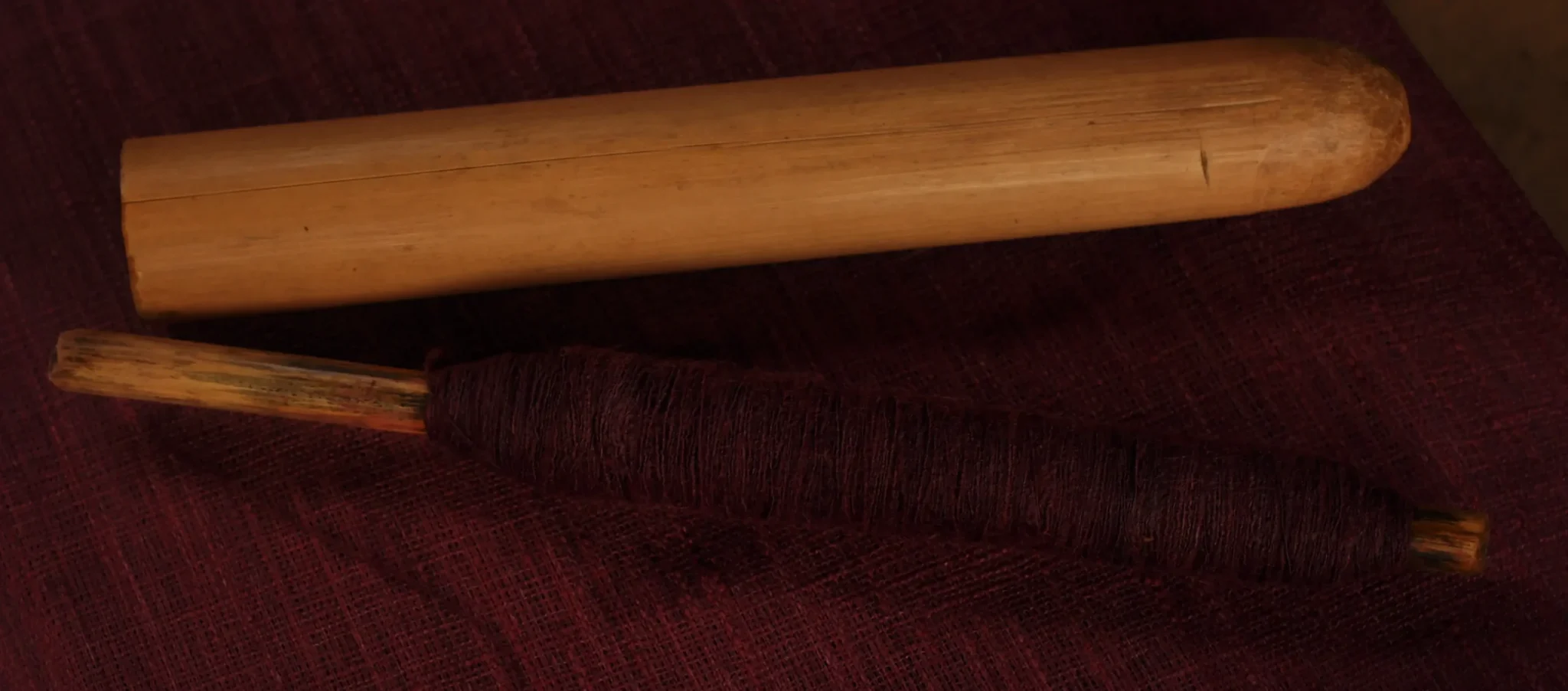
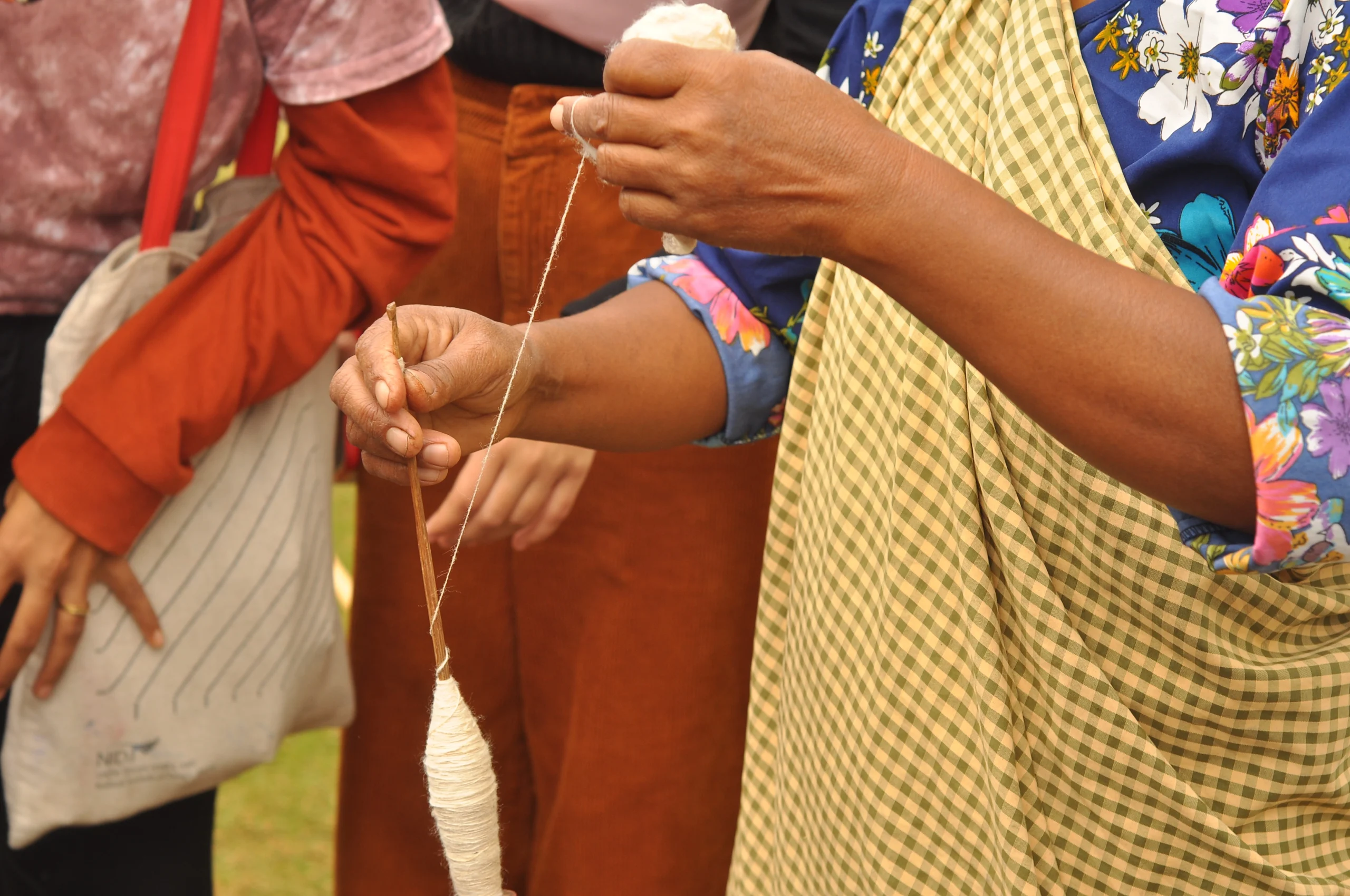
Eri silk behaves differently from most silks. Unlike filament silks that are drawn into long, continuous threads, eri exists as a short fibre, closer in character to wool. It must be spun rather than reeled, and this fundamental difference gives eri its distinctive personality—soft, matte, textured, and adaptable across weights.
This spinning process is not mechanical. It relies on sensitivity and control developed over years of practice. Artisans work with simple, human-powered tools—foot-operated wheels and handheld spindles—methods that allow the fibre to retain its natural integrity. The knowledge is largely passed through generations, often within households, enabling women to contribute economically while working within familiar rhythms of daily life.
At Rasaaya, eri yarn is developed in multiple densities to suit different textile expressions. Finer yarns lend themselves to light, breathable fabrics, while thicker counts create substance and warmth. In many of our weaves, the balance between delicacy and strength is carefully considered—combining finer yarns with slightly heavier ones depending on structure, surface, and intended use.
What results is a fabric that does not aim for sheen, but for depth—one that ages gracefully, holds warmth gently, and reflects the slow intelligence of its making.
Natural Dye
In Assam, colour has long been understood through lived knowledge. Indigenous communities carry an intimate understanding of plants and processes—where dyeing is not separate from weaving, but an extension of it. Traditions rooted in materials like indigo and madder continue to shape this landscape, and sustaining these practices remains essential to their survival.
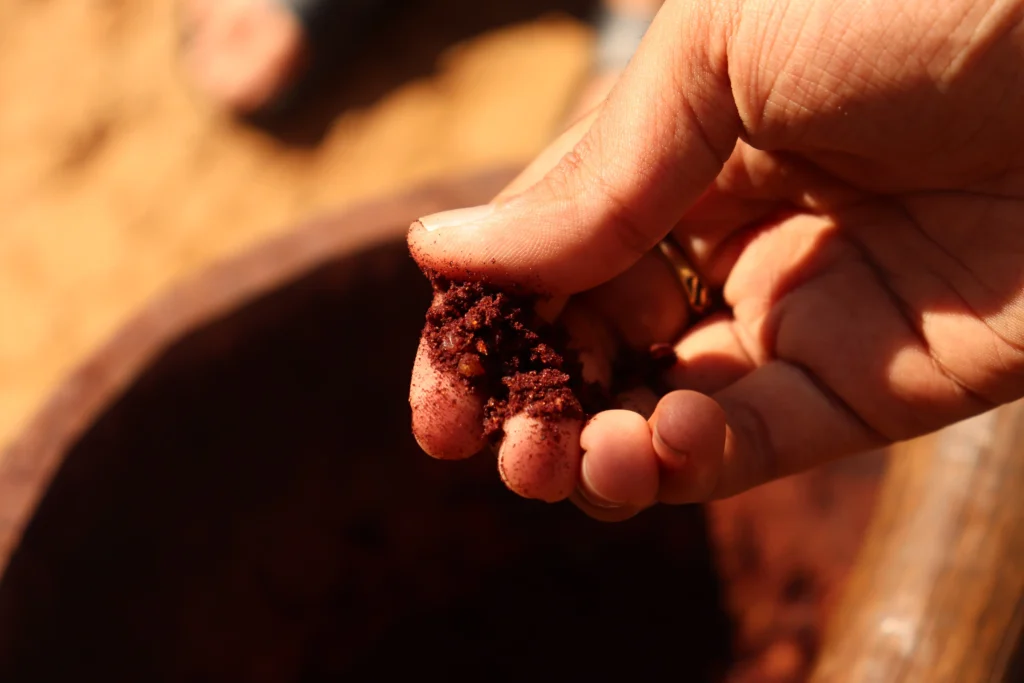
The surrounding forests offer a remarkable range of dye sources—drawn from leaves, roots, seeds, bark, and vines. We work only with regenerative plant materials that can be replenished naturally, ensuring that living plants and ecosystems remain unharmed.
Every stage of dyeing is carried out by hand, without synthetic additives or chemical accelerants. Colour emerges slowly, guided by experience and patience. Through careful combinations of natural materials—such as turmeric, lac, indigo, Indian madder, teak, and iron—we develop a nuanced palette that reflects both place and process.
Weaving
Colour settles into cloth through time. Once the yarn has absorbed dye, it is taken to the loom, where fabric is built slowly, thread by thread. In Assam, weaving is not an occupation set apart—it exists within domestic life, shared knowledge, and collective memory. The loom is familiar, and the act of weaving carries quiet confidence rather than spectacle.
Working on handlooms allows for decisions to be made in the moment. Patterns are adjusted, surfaces are explored, and irregularities are welcomed. Without the pressure of uniformity, the fabric remains responsive to the hand that makes it—resulting in textiles that feel considered rather than produced.
Eri silk forms the foundation of our work, chosen for its softness and endurance. The loom also allows us to introduce other responsible fibres when needed, creating variations in density, texture, and strength—each determined by use, not trend.